

Why multi-chain browser wallets feel like progress — and why security still nags me Deixe um comentário
Whoa! I remember the first time I moved funds between chains in my browser wallet—my heart raced a little. Initially I thought cross-chain meant convenience only, but then I realized it opens new attack surfaces and user confusion. On one hand it solves composability headaches; on the other, it demands smarter UX and better risk signals from the wallet. My instinct said: somethin’ has to give if we want mass adoption.
Seriously? Yeah. Browser wallets used to be simple vaults for a single chain. Over the last few years they sprouted features like token swaps, contract interactions, and now multi-chain support that tries to hide complexity. That convenience is seductive though. And seduction in security contexts is dangerous because people click before thinking.
Here’s the thing. Multi-chain means the wallet must validate and present contextual info for each chain differently, while keeping the mental model for users simple. The wallet has to show chain-specific gas, native token warnings, and differing confirmation semantics all at once. If any of those signals are inconsistent, the user makes risky choices without knowing. I’m biased toward transparency; that part bugs me.
Hmm… user education helps but isn’t the whole fix. Wallets must be designed for error tolerance. They should prevent dangerous defaults, flag cross-chain bridges, and surface transaction metadata in digestible ways. Actually, wait—let me rephrase that: the interface should do the heavy lifting, not the user. On the technical side, that means robust origin isolation, signature preview clarity, and deterministic transaction decoding across EVM-compatible and non-EVM chains.
On a gut level, I still trust locally held keys more than custodial alternatives. That trust comes with responsibilities though: key management, seed safety, and smart contract approvals. Initially I thought hardware key integration solved most worries, but hardware alone is not enough—users still click “Approve” on unlimited allowances. So we need better approaches to approvals, like automatic allowance expiration and per-contract caps.
Okay—so what does a secure multi-chain browser wallet actually do differently? It separates network contexts clearly, offers a native currency warning for each chain, and avoids abstracting gas away entirely. It should also provide clear origin indicators for dApps, a permission audit trail, and transaction intent checks that translate cryptic calldata into plain language. On balance, that reduces cognitive load without hiding risk.
Check this out—extensions have extra constraints. They run in the browser process and can be phished via malicious sites, rogue extensions, or compromised supply chains. My hands-on time building extension features taught me one thing: the extension boundary needs defense-in-depth. Background scripts, minimal privileges, and granular permissions all matter, and so does the update mechanism.
Hmm… speaking of updates—automatic updates are convenient but scary when an update carries a vulnerability. On one hand automatic updates patch bugs quickly. Though actually, they press a lot of trust onto a chain of maintainers and distribution platforms, and when that chain breaks the user loses control. We should offer verifiable update signing and optional delayed updates for cautious users.
Whoa! I want to call out bridges and cross-chain relayers here because they’re often the weakest link. A multi-chain wallet typically needs to talk to relayers or integrate bridging tools. Those middlemen can re-route transactions, request odd allowances, or inject extra calls into batched transactions. A wallet that limits approvals, simulates post-bridge flows, and warns when assets leave a chain gives users a fighting chance.
Initially I thought meta-transactions and gas abstractions would be a huge UX win, and they are. But then I realized they complicate security assumptions—third-party payers can add vectors for replay or tampering. So the wallet must show who pays gas, which account signs what, and whether relayers can alter calldata. That clarity reduces surprises downstream, and it also builds trust when users see consistent patterns.
I’ll be honest: sometimes the industry moves faster than the average wallet builder can securely adapt. New chains pop up with non-standard RPC behaviors and quirks. On the flip side, a good wallet architecture anticipates variance: modular chain adapters, strict JSON-RPC whitelisting, and layered sanity checks. Those design choices take extra engineering time, but they pay back in fewer support nightmares and exploited edge cases.
Whoa! Here comes the recommendation you can act on—if you’re testing wallets, watch for explicit chain labeling, readable transaction intents, and approval management tools. Also look for session isolation (dApp sessions that can’t access other site contexts) and an approvals dashboard that lets you revoke in one click. These features separate the competent wallets from the ones that are pretty but risky.
My practical pick and how to try it
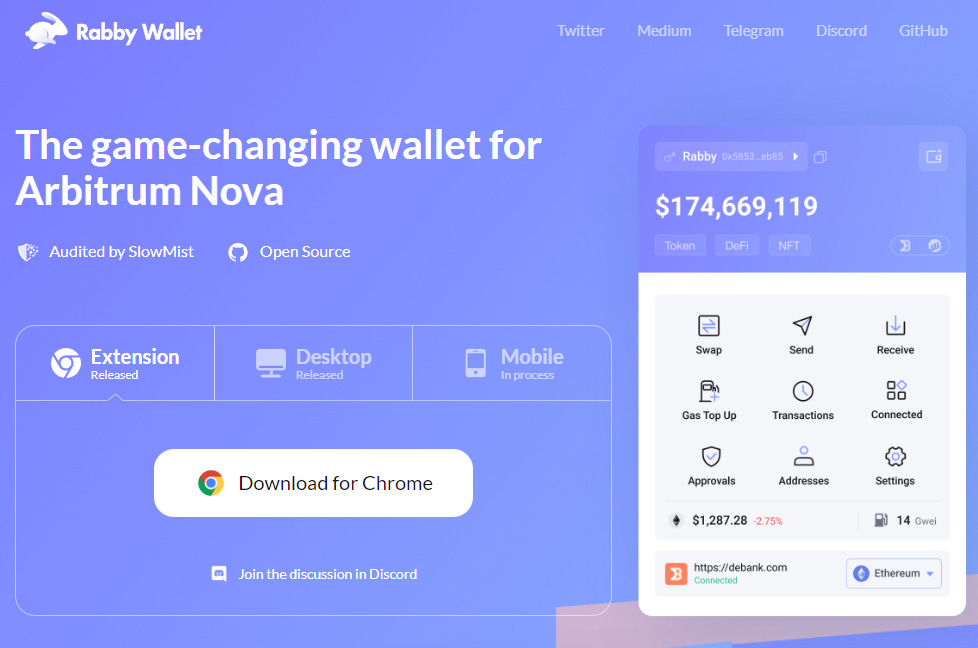
Okay, so check this out—I’ve been using several multi-chain browser wallets in the wild, and one that balances usability with sensible security defaults is rabby. My experience with it showed thoughtful approval flows, clear chain contexts, and easy hardware-wallet pairing. I’m not 100% sure it fits every advanced use case, but for typical DeFi activity it removes a lot of friction while keeping control local and visible.
On the technical front, Rabby (like other good wallets) decodes calldata for common token interactions, warns about unlimited allowances, and surfaces the contract’s name when available. Those little things cut down on mistaken approvals. If a wallet asks you to approve a token without showing where that token will be used, close the prompt and investigate—really, do that.
Something felt off about wallets that auto-approve gasless flows without clear authorization. The consent model must be explicit. On the other hand, signing UX that reduces error-prone copy-paste is a net win, so I like when wallets combine automation with firm confirmations for risky steps.
Here’s what else to watch: extension permissions during installation, RPC endpoints the wallet offers by default, and whether the wallet provides a clear path to hardware key integration. Those are low-effort checks that catch a lot of misconfigurations. And yeah, backups—without a seed phrase backup that you verified, nothing else matters.
I’m biased toward wallets that let advanced users opt into power features while keeping defaults conservative for new users. Power users want batch transactions and gasless relayers; beginners want safety nets and clear warnings. Too many wallets flip those priorities and then wonder why users lose funds.
On one hand I admire experimental UX that nips friction, though actually many experiments need stronger safety rails before broad release. A/B tests for onboarding are great until a subset of users loses funds because they missed a subtle checkbox. So thorough testing and staged rollouts are essential.
FAQ
Is a multi-chain wallet less secure than a single-chain wallet?
Not inherently. The risk comes from complexity and inconsistent UX signals. A well-designed multi-chain wallet isolates chain contexts, makes gas and token flows explicit, and enforces conservative defaults. If a wallet hides chain-specific nuances, that’s when risk rises.
Should I use hardware keys with my browser wallet?
Yes, whenever possible. Hardware keys reduce exposure to browser-level compromise. But pairing must be implemented correctly—look for wallets that support verified hardware signing and show clear transaction details on both the device and the extension.
What quick steps improve my safety today?
Revoke unused allowances, use chain-aware wallets, verify RPC endpoints, pair a hardware wallet, and avoid signing opaque calldata. Also keep small test transactions when interacting with new contracts or bridges. Those habits prevent many common losses.
